That’s right! I’ve broken out of the dark fiction corner and written something different – very different! So may I present to you, Twiggy Voo? Available here (it is also available on KU for the time being).
December 1913. Since Great Britain’s defeat at Waterloo, the island nation has existed as an ‘arrondissemont’ of France. Dowager Empress Eugénie the mother of Emperor Louis-Napoléon, is hosting a country party at her Hampshire home, Farnborough Hill House. Invitations to her Christmas gatherings are coveted and this particular occasion consists of a mixture of aristocracy, businessmen and music hall artistes including the infamous Paulette.
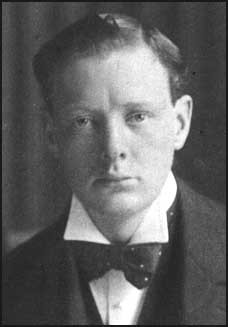
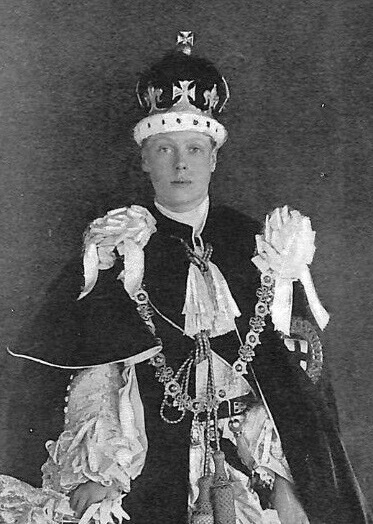
Winston Churchill, purveyor of fine meats, and part of Britain’s underground resistance is also invited. His remit is to keep the errant Prince Eddie in check and shed some light on Paulette’s involvement in the scandal swirling around the murder of his friend, singer Harry Fragson. However, when the Empress decides to stage her own ‘murder mystery’ as part of the festivities, a real body in the library appears. Immediately, Paulette is suspected.
As snow sets in and isolates the house and its inhabitants, can Winston save her bacon and escape a roasting from both the Emperor and the nominal King, George V?
Some of the names you will recognise, others not so much, so here is the cast (most of it), and yes, liberties have been taken.
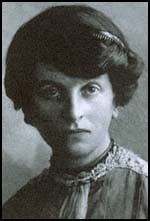
Harry Fragson (music hall star)Monte Saldo (muscle man)Winston ChurchillMarie Lloyd (music hall star)Empress EugenieKaiser WilhelmEddieDuke Ulyanov (aka Lenin, reluctant aristo)Inessa ArmandAdolf Schicklgruber (failed artist)George V (nominal King)Franz FerdinandClemmie (aka Lady Churchill)
I had a huge amount of fun writing this, taking liberties with history in more than one instance. And there is also a dollop of humour amongst the pages.
So much of our past is obscure and it seems remarkable to me, that in many instances, one or two references to some being or practise centuries ago can give rise to a whole set of beliefs which people now regard as canon. When you start to dig into the history, look at those primary sources, the in-depth studies of academics, then you realise how much is often wishful thinking on our part. We want, we believe, these things to be true because everybody says so. I read widely and a favourite author is Professor Ronald Hutton. He has written a number of books which I would recommend to anyone interested in folklore, occult, and pagan practises – he has debunked so much of what I thought of as true, leaving only a vague ‘possibly’ in its place.
But it doesn’t matter if what you eventually discover isn’t that much, that it doesn’t conform to what you thought you knew because that gives you, as a writer, a huge amount of scope to play with characters and beliefs in your own way. And this is what I have done with pagan goddess, Rheda, who appears in the pages of Harrowfield. What is actually known about her?
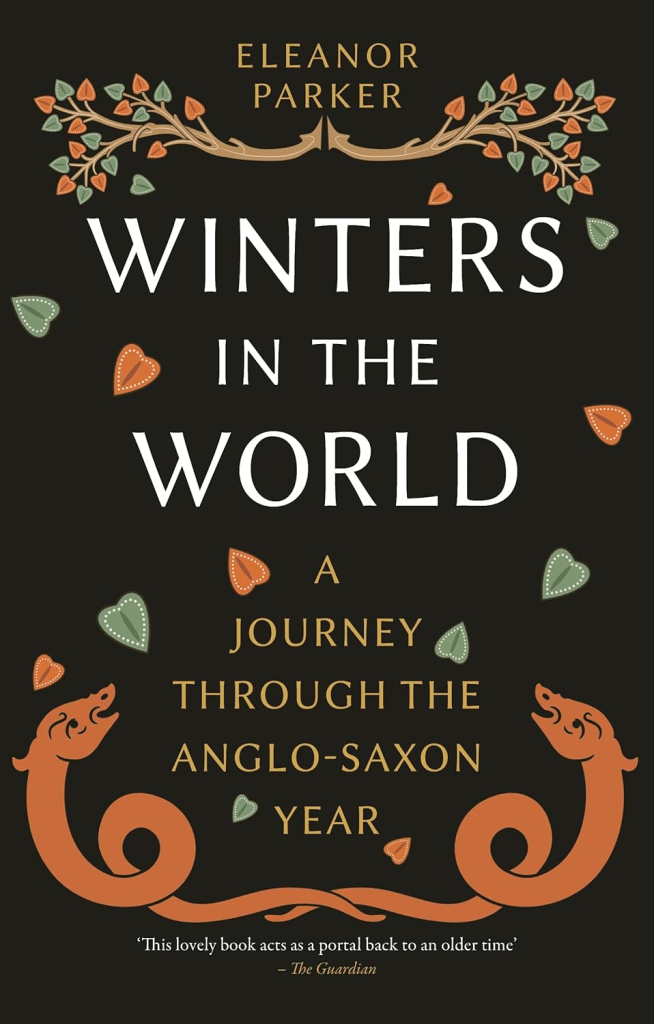
Eleanor Parker in her Winters of the World – A Journey Through the Anglo-Saxon Year mentions Rheda a couple of times. March is the month Hreðmonað, named for the goddess Hreða (or Rheda) and is a time when sacrifices were made to her. This information comes from her own reading of the Anglo-Saxon historian and monk, the Venerable Bede who in turn ignores other possible names for March, eg Hlyda. It is entirely possible that the month is more to do with the etymology of the words used and how they represent March as ‘fierce’ and ‘wild’. When I first started digging around, I actually, and still do, preferred the name Hreða (Hretha) to Rheda but thought it might cause problems with pronunciation. Do I include the ‘H’ at the start or not when I say it? I had that trouble with Hweol in The Five Turns of the Wheel and even though I know the correct pronunciation I keep forgetting. This is me making life easy for myself – and the reader.
Her book is a wonderful read by the way, blending her knowledge of the customs and ritual of the Anglo-Saxon world with the poetry of that time.
Hretha also gets a very brief mention in Ronald Hutton’s Pagan Britain. He, too, references Bede as the source for this particular goddess. This reinforces a little of what I mentioned above (his book was published before Winters of the World):
“Various scholars have cast doubt on Bede’s two goddesses, as they are mentioned nowhere else and the source of his information is unknown. He speaks of them only because of his belief that the Anglo-Saxon months equivalent to March and April, Hrethmonath and Eosturmonath, were named after them.” (p.298, Pagan Britain, Hutton).
And this from Bede’s own Reckoning of Time:
“The first month, which the Latins call January, is Giuli; February is called Solmonath; March Hrethmonath; April, Eosturmonath; May, Thrimilchi; June, Litha; July, also Litha; August, Weodmonath; September, Halegmonath; October, Winterfilleth; November, Blodmonath; December, Giuli, the same name by which January is called.”
“Hrethmonath is named for their goddess Hretha, to whom they sacrificed at this time.”
And there you have it. The one reference to Hretha in all of our early literature. When you browse online and find images, all are absolutely fictional, the artist’s own interpretation.
Go to Wikipedia and you have three seemingly informative – at first glance – paragraphs. Boil them down after you remove the etymological discussion and you have simply what has been stated above.
It does however include a reference to Jacob Grimm’s theories “that the name could be of Germanic origin ‘ proposes a connection between *Hrēþe and the Old High German female personal name Hruada. Grimm theorizes that the Old High German form of the goddess name Rheda was *Hrouda‘.”
So when you next decide to write a folk horror or folk lore fiction, use the past as your playground and make it your own. I did, as you will find in Harrowfield itself.
I blame Hellebore magazine for leading me to this author! These magazines not only provide informative and interesting articles but they also have further reading lists linked to them, hence my growing Ronald Hutton collection.
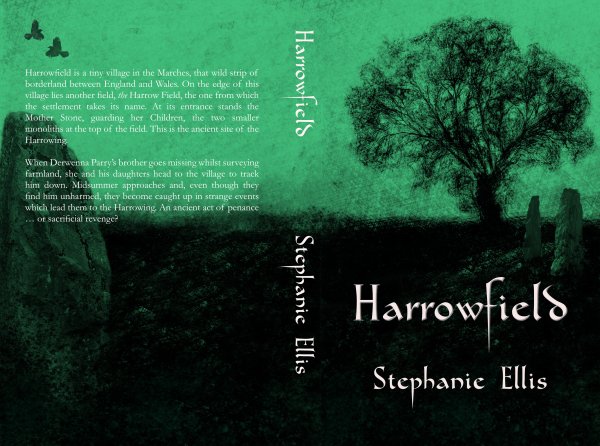
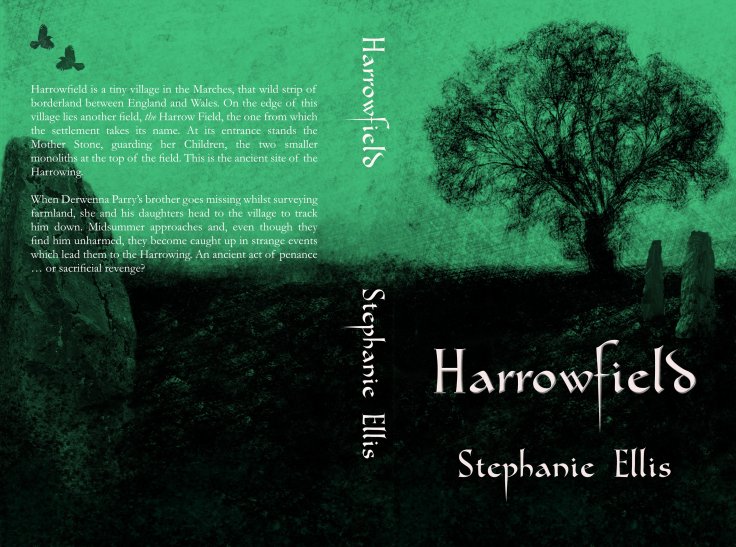
Within my upcoming novel, Harrowfield, I have been playing with the imagery and folk lore of Britain to create a belief system within the village in which the tale is set. One such aspect is a reference to the ‘path of green and gold’. It is both a physical route and a metaphorical route linking the villagers of Harrowfield to the site of their beliefs. But what is the green and gold? Nothing more than the golden bough itself: mistletoe.
Mistletoe has long been a feature of folk lore and mythology. In its most famous instance, it was the one plant which had failed to promise never to harm Odin’s son, Baldr. Not because it refused, however, simply that Frigg had thought the shoot too young to be asked such a thing. Loki discovered this and subsequently tracked the plant down and gave it to Baldr’s brother, the blind god Hod, instructing him to shoot it at Baldr, thereby causing his death. (The Prose Edda, Snorri Sturluson).
Beyond this, it is James George Frazer, with his book, The Golden Bough, who has investigated its use in folk lore and mythology. The title of his work was taken from the reference in Virgil’s Aeneid which describes how the poet needed to obtain the sacred item in order to enter the Underworld.
Perch’d on the double tree that bears the golden bough. Thro’ the green leafs the glitt’ring shadows glow; As, on the sacred oak, the wintry mistletoe,
(The Aeniad)
Fraser takes this description as being mistletoe seen through ‘the haze of poetry or of popular superstition’. That the plant is needed to journey to the realm of the dead meant that it held the power of life and death itself. Indeed, its existence on the oak tree, the King of the Wood, is used to mirror the death of Baldr. Until the mistletoe is removed, the King cannot die. He also explains the gold colour as being the ‘rich golden yellow which a bough of mistletoe cut and kept for some months’, and references the sight of bunches of the plant being hung by Breton peasants in June. Much of what Fraser says, or at least his wilder theories, have been debunked, but his work does provide a great deal of inspiration in terms of creating a lore for a fictional work.
The premise that mistletoe is closely associated with the fall of the old king and the rise of his successor is continued in Robert Graves White Goddess:
Look, the twin-temple posts of green and gold The overshadowing lintel stone of white. For here with white and green and gold I shine – Graft me upon the King when his sap rises That I may bloom with him at the year’s prime, That I may blind him in his hour of joy.
Druids were also referenced by Pliny (in his Natural History) as using the mistletoe for their rituals, describing how the priest ‘climbed the oak and cut the mistletoe with a golden sickle’ and once cut, sacrifices were made. The writings from this time should be treated with caution, being a product of hearsay or imagination rather than the reality, and Ronald Hutton reinforces this in his well-researched and informative Blood and Mistletoe: The History of the Druids in Britain. For instance he disputes that Lindow Man, the remains of a body found in Lindow Moss, definitely died as a result of a ritual killing – he could have just been executed. And yes, his stomach held traces of mistletoe pollen, but that could easily have contaminated his last meal. If you read this particular book, be warned you might be disappointed to find that so much that is taken as true when it comes to Druids is make-believe and invention.
These days mistletoe is simply regarded as the plant under which people kiss at Christmas. Yet much of its mythology actually centres on its supposed power over life and death.
In Harrowfield, the path of green and gold is followed in its own way. Whether that is to an end or a beginning, you will have to find out for yourself.












 Stephanie Ellis