A Fragile Thing and a Neurotic Woman

And no, I don’t mean me!

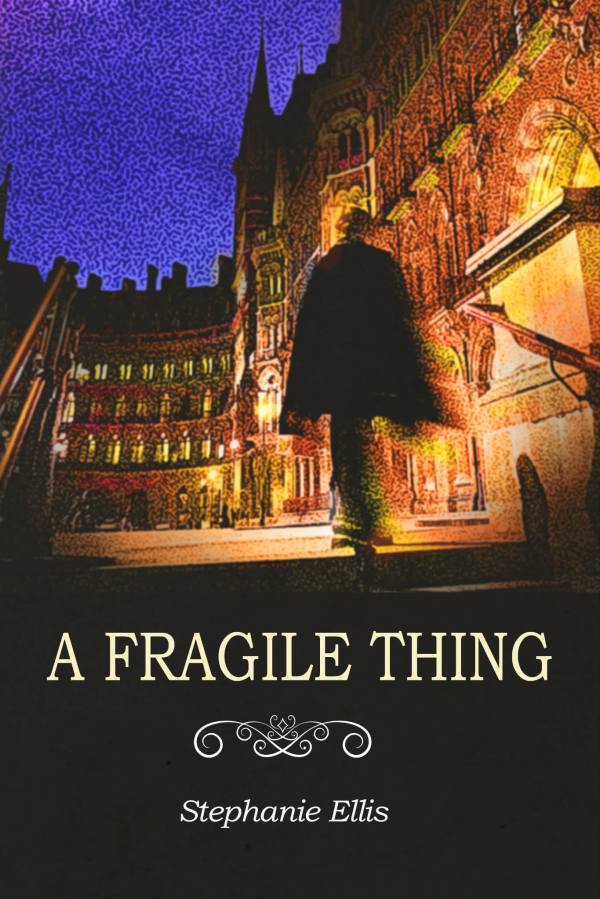
Once upon a time, my novel, A Fragile Thing, was a short story of 3000 words and appeared in the anthology, Gothic Tales of Terror, back in 2015. It’s title was “Leave” and centred on the unfortunate consequences of a Victorian mesmerist’s assumption of power.

The Victorian era was one which saw a growth in the fields of hypnotism, mesmerism and spiritualism. Areas which were often regarded as the work of quacks and charlatans and whose practitioners were sometimes seen as no more than entertainers of a fraudulent kind. It was, however, a field which some saw gave an answer to the neurotic and hysterical women who apparently inhabited the upper realms of society. Whenever I have researched the Victorian era (and I have studied it a lot), it is noticeable that only the more genteel and upper echelons seem to be affected in this manner. The working class women are struggling to just survive, caring for their families as well as working (oh yes, for the working class woman, they really did ‘have it all’ back then). But for those who were well off, were regarded as weak or somehow compromised because of their female nature, they were seen as needing to be ‘fixed’ and I, personally, regard this as part of the need of the husband or the father in such instances to control their child, wife, niece, mother. And if they couldn’t be ‘fixed’, quite often they were put away in some asylum or other. (I also think corsets are responsible for a lot of women’s ‘issues’ at the time, but that’s another topic.)
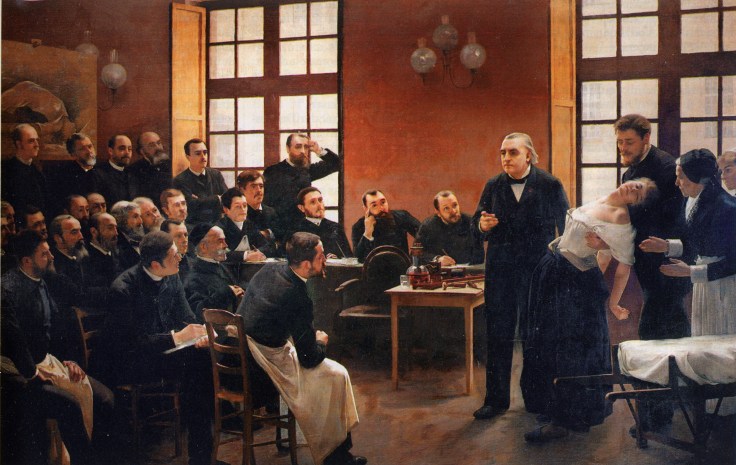
I came across one tale in particular, and it is his story which inspired “Leave” and A Fragile Thing and the subsequent development of the latter’s central character: Isaac Bercow.

Franz Neukomm, an Hungarian hypnotist, was attending a séance at the castle of Tódor Salamon. His twenty-two-year old daughter, Ella, had previously appeared with Neukomm and, under hypnosis, had apparently been able to solve events such as murder and theft.

On this particular occasion, however, Neukomm directed Ella’s soul to leave her body and travel a distance and enter the body of an ill man. This she did and related details of the man’s illness to the audience. But when she reported the probable outcome of the man’s disease, she collapsed and died.

An investigation was launched by the authorities to see if this was in fact a ‘death by hypnotism’. Neukomm was initially convicted of manslaughter but then cleared. She had died of heart failure which could have happened at any time. It was just an unfortunate coincidence.

A Fragile Thing

ISBN HB: 978-1-965546-27-7

ISBN PB: 978-1-965546-28-4

From Watertower Hill Publishing 17th March

Is it Downhill After 50(+) for Women in Horror?

A while ago, I wrote a blog post for the British Fantasy Society ‘A Woman’s World (Not)’ because as a woman who came late to writing – and writing horror at that – I was struggling to see myself in the community. Where were others like me? Where were the opportunities? And it’s something I still ponder although with a few improvements.

I have found some of those older women, usually via zoom meetups or readings, women who don’t have profile pics or the images I had seen did not equate to the reality. Why are we so frightened of showing ourselves as we are? I have also seen more women in conventions and some improved networking aspects but I still have a struggle with the issue of age and the female writer. I am now 60 and have been writing for just over a decade, starting like most with short stories and my first novella in 2020, with novels following. And whilst I saw possibilities still at 50, I am now wondering if those are vanishing.

Rejections are often worded that they ‘can only take on a small number of new authors’ to develop their careers. These wordings have had me thinking that they do not perceive an older female writer as ‘value for money’, even if we can give twenty plus years more of our writing. Calls which say no simultaneous submissions with long turn round times suddenly seem not worth doing. As an older writer, thoughts of mortality make you realise you don’t have the time to wait around for some decisions. Nine months plus for a book? I don’t have that time to waste any more. I don’t mind that a book will be accepted but not published for a year or two. That’s fine. It’s the idea of wasted time that I have a problem with.

I have my own experiences, my own perceptions and I would love to know what others have found. I recently responded to Gwendolyn Kiste’s call out for women who’d like to be involved in raising issues concerned with women in horror, taking part in discussions, promoting each other – all sorts of things and I stuck my hand up, referencing in particular my interest in older women writers in our genre. We’re hopefully going to get a panel together and do something online related to this topic. With this in view, I’d like to find other women who fall into the category of the 50+ writer. Yes, to take part in the panel, but also to provide me with information I can use to compile an article giving a snapshot of what it’s like to be us. If you would just like to offer up responses to the questions I pose below and are happy for me to use your comments in my article, please respond in the comments or use the contact form (I can withhold names if wished).

I think there are two aspects to consider before you look at the questions:

Are you a woman who has been writing for some time but now hitting 50+ or are you a new writer just starting out at 50+?

For the established writer, are you seeing few opportunities, do you feel you are becoming invisible?

For the new writer, as above but do you feel invisible already?

Do you think women are invisible as older writers because they are also invisible within the pages? (We see few older female protagonists, including those showing menopausal/post-menopausal symptoms. Our biology impacts our lives in all sorts of messy ways but it’s never shown on page or screen, barring the occasional exception.)

Do you think that male editors don’t necessarily ‘get’ female horror, ie we don’t write the kind of horror they think people want to read? And life experience can deliver up some pretty grim source material.

Are you restricted in your writing by your circumstances, especially those working full-time but with carer roles (whether children/elderly parents)?

Social media is a horrible necessity but it is draining. Does the whole thing exhaust you? Do you have time for it?

Do you think social media is skewed against older women because the cult of youth or youthful appearance dominates?

Do you feel isolated, are you looking for a support network? (Or where have you found your tribe?)

Have you experienced ageism (and/or sexism)?

Do you think ageism exists or do you think this is perception when the reality is different?

What could be done within the indie horror industry to help older women?

When submission calls asks for underrepresented groups, do you think older women fit this category?

Many of the above questions could apply to female writers of other genres but I think a proper look into our own industry is worthwhile. If there is an issue, it needs to be dealt with, if it’s misconceived perceptions, then it would be nice to put those to rest.

Blog at WordPress.com.

Up ↑