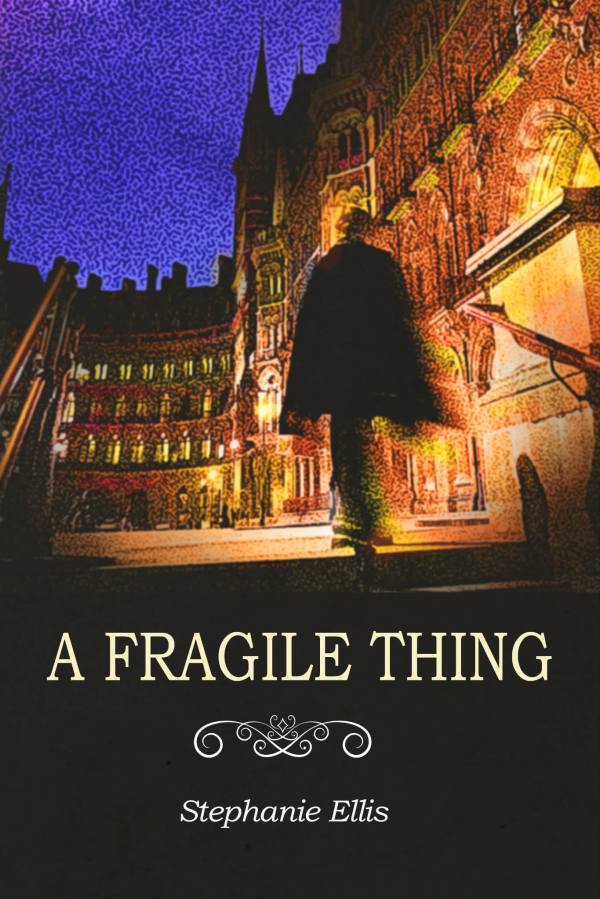
That’s right! I’ve broken out of the dark fiction corner and written something different – very different! So may I present to you, Twiggy Voo? Available here (it is also available on KU for the time being).
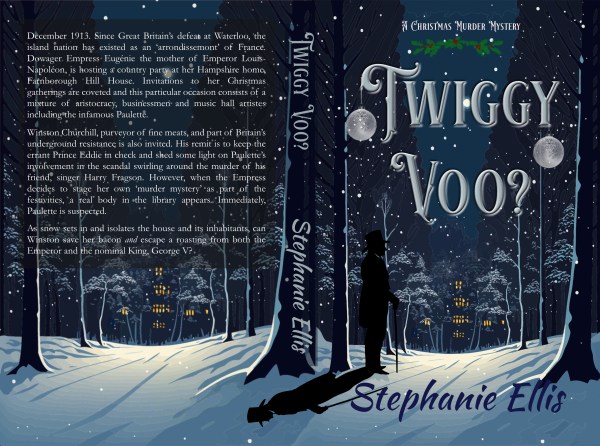
December 1913. Since Great Britain’s defeat at Waterloo, the island nation has existed as an ‘arrondissemont’ of France. Dowager Empress Eugénie the mother of Emperor Louis-Napoléon, is hosting a country party at her Hampshire home, Farnborough Hill House. Invitations to her Christmas gatherings are coveted and this particular occasion consists of a mixture of aristocracy, businessmen and music hall artistes including the infamous Paulette.
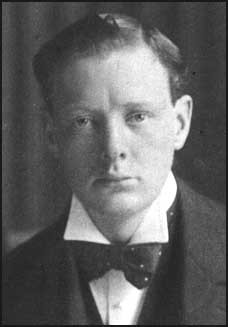
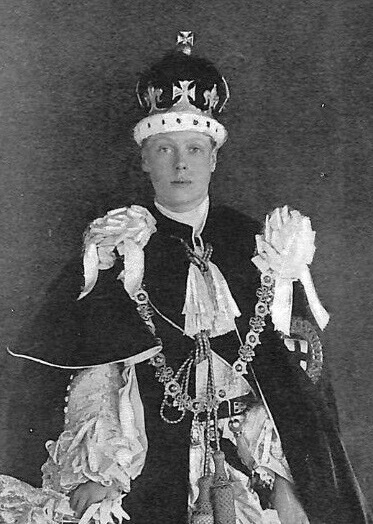
Winston Churchill, purveyor of fine meats, and part of Britain’s underground resistance is also invited. His remit is to keep the errant Prince Eddie in check and shed some light on Paulette’s involvement in the scandal swirling around the murder of his friend, singer Harry Fragson. However, when the Empress decides to stage her own ‘murder mystery’ as part of the festivities, a real body in the library appears. Immediately, Paulette is suspected.
As snow sets in and isolates the house and its inhabitants, can Winston save her bacon and escape a roasting from both the Emperor and the nominal King, George V?
Some of the names you will recognise, others not so much, so here is the cast (most of it), and yes, liberties have been taken.
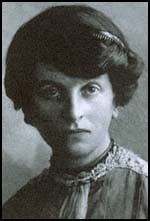
Harry Fragson (music hall star)Monte Saldo (muscle man)Winston ChurchillMarie Lloyd (music hall star)Empress EugenieKaiser WilhelmEddieDuke Ulyanov (aka Lenin, reluctant aristo)Inessa ArmandAdolf Schicklgruber (failed artist)George V (nominal King)Franz FerdinandClemmie (aka Lady Churchill)
I had a huge amount of fun writing this, taking liberties with history in more than one instance. And there is also a dollop of humour amongst the pages.
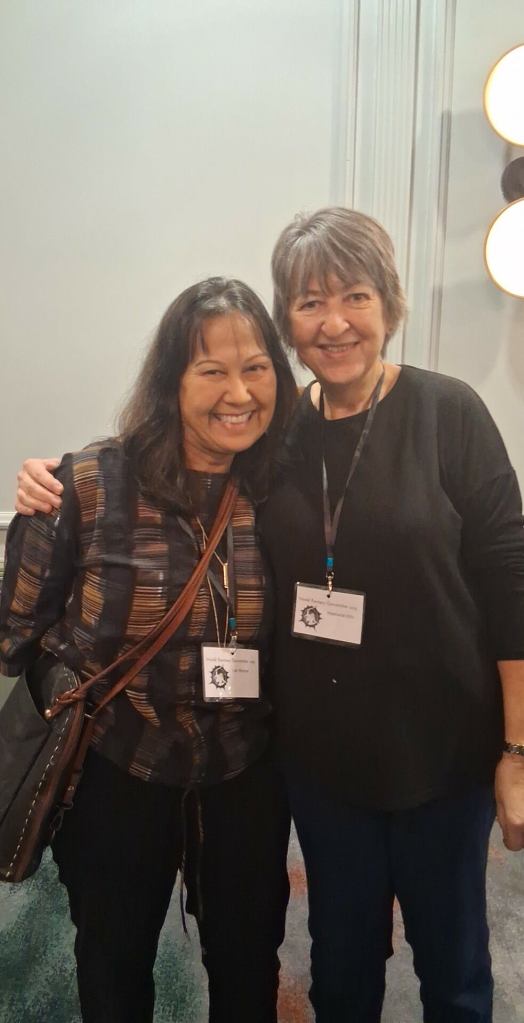
This year, World FantasyCon took place in Brighton, UK. Wrexham to Brighton is over 250 miles, a bit of a trek, but one we decided to do because it gave me a chance to meet up with writers coming in from different parts of the globe. In particular, the wonderful Lee Murray – with whom I have been online friends for some years now – was arriving from New Zealand. But there were many people I wanted to see, whether for the first time or to renew acquaintance and, as is the nature of cons, many of these meet ups were fleeting in nature. Yet it reinforced connections and reminded me that writing is a ‘real’ thing, it is a proper profession and not the ‘hobby’ that so many outside the business seem to regard it.
Before I go any further, however, a huge thankyou to my lovely husband, Geraint. He always gets me to these things and is forever my moral support.
So, Brighton. Warmer than Wrexham most definitely but matching the latter in terms of wind! Almost home from home in that respect. Some brilliant wall art too – we discovered the Simpsons not far from the hotel. And the programme – so much to choose from and again, some clashes which made it very hard to decide which to attend.
From folklore to emotional wringers, the impact of AI to what makes British horror British, the panels were interesting and entertaining. I also made sure to attend a few book launches this time:
Alexandra Beaumont – Ballad of River Bones (Brigids Gate Press), who proved herself a fantastic singer. It was great to see these books in the flesh having had some involvement in their production.
On a side note, it was also lovely to fleetingly meet SJ Townend, author of Sick Girl Screams (Brigids Gate Press), another book I helped produce. Next time, we will talk properly!
The Slab Press – Hiding Under the Leaves, folk horror anthology. Features Lauren McMenemy’s debut story (which I beta read) and being a Horror Tree colleague, of course I supported. And got the book signed. And ate cake.
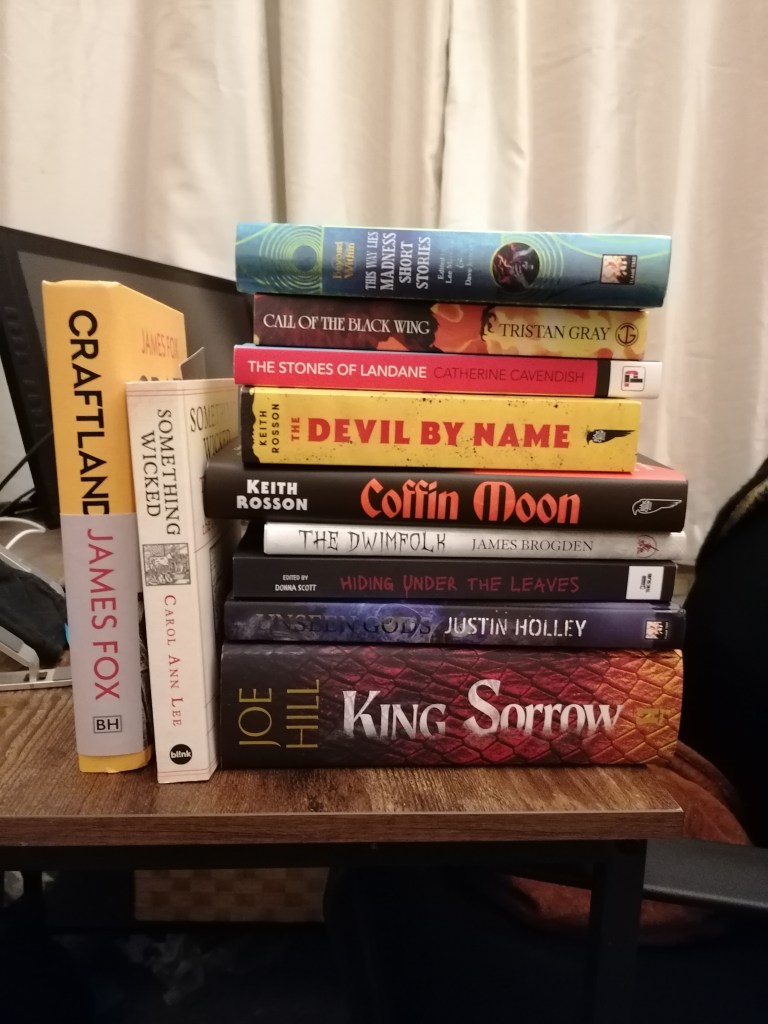
Other books were signed by Keith Rosson (Coffin Moon), Catherine Cavendish (The Stones of Landane), Lee Murray & Dave Jeffery & Kayleigh Dobbs (This Way Lies Madness).
And I also met with Ellen Datlow and was very reassured by her comments on editing. I wasn’t going to go initially, being a coward, but Lauren McMenemy nudged me and Trevor Kennedy into going. So me and Geraint turn up promptly – and Lauren’s late! Starbucks to blame apparently.
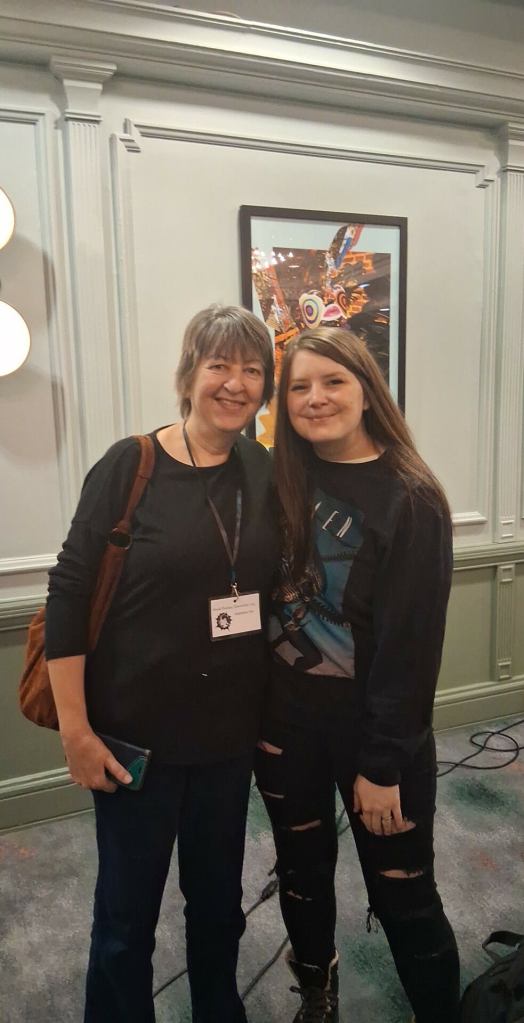
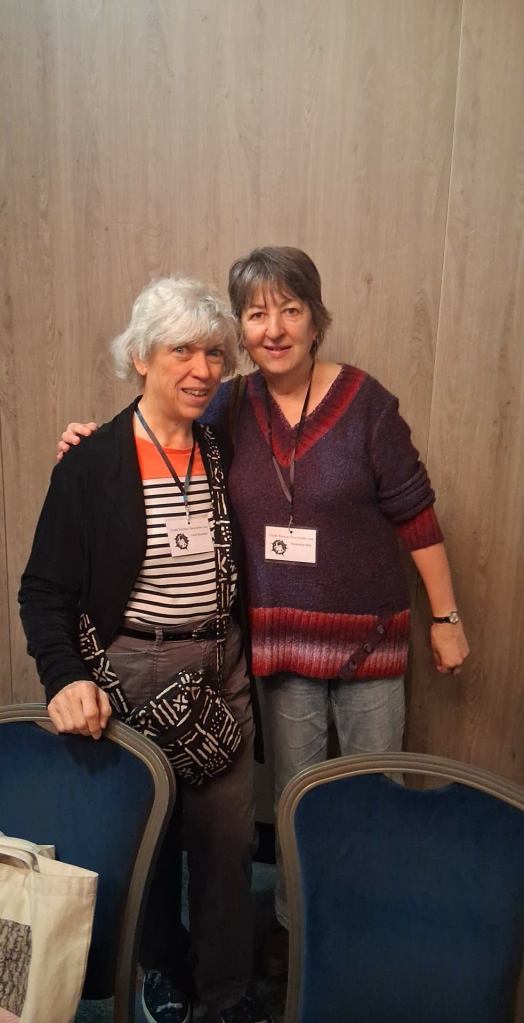
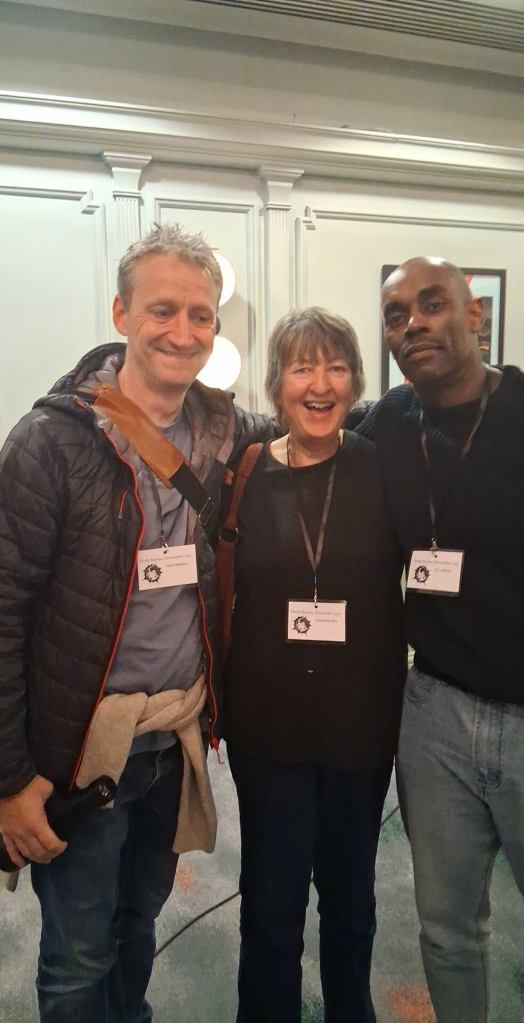
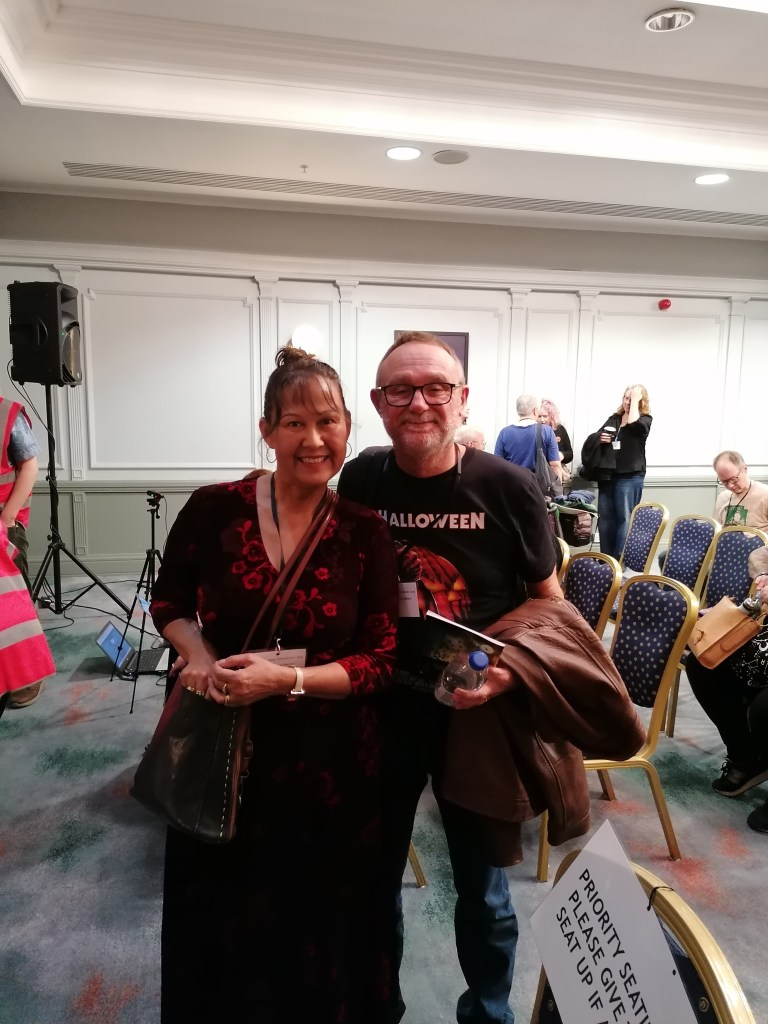
Who else did I meet? A number are shown below but I missed out on pics with Trevor Kennedy, Catherine Cavendish, Ben Langley, Erzebet Barthold (Hadean Press) amongst others. Never mind, next time.
Any lows? Only one, eating something which disagreed with me ended up with me missing a chunk of Saturday afternoon/evening programming. Such is life. But I was well enough to go back for some Sunday morning panels before we left at 1 pm to trundle back to Wales.
It was a great convention and thanks go to everyone involved in its organisation. I had a brilliant time.
Finally meeting Lee!Kayleigh DobbsCarol GyzanderEllen Datlow (and gleaned a few editorial insights!)David Watkins and CC AdamsLee and DaveBooks!Alexandra Beaumont’s LaunchLauren’s Book LaunchCC waiting to readBritish Horror Panel
So much of our past is obscure and it seems remarkable to me, that in many instances, one or two references to some being or practise centuries ago can give rise to a whole set of beliefs which people now regard as canon. When you start to dig into the history, look at those primary sources, the in-depth studies of academics, then you realise how much is often wishful thinking on our part. We want, we believe, these things to be true because everybody says so. I read widely and a favourite author is Professor Ronald Hutton. He has written a number of books which I would recommend to anyone interested in folklore, occult, and pagan practises – he has debunked so much of what I thought of as true, leaving only a vague ‘possibly’ in its place.
But it doesn’t matter if what you eventually discover isn’t that much, that it doesn’t conform to what you thought you knew because that gives you, as a writer, a huge amount of scope to play with characters and beliefs in your own way. And this is what I have done with pagan goddess, Rheda, who appears in the pages of Harrowfield. What is actually known about her?
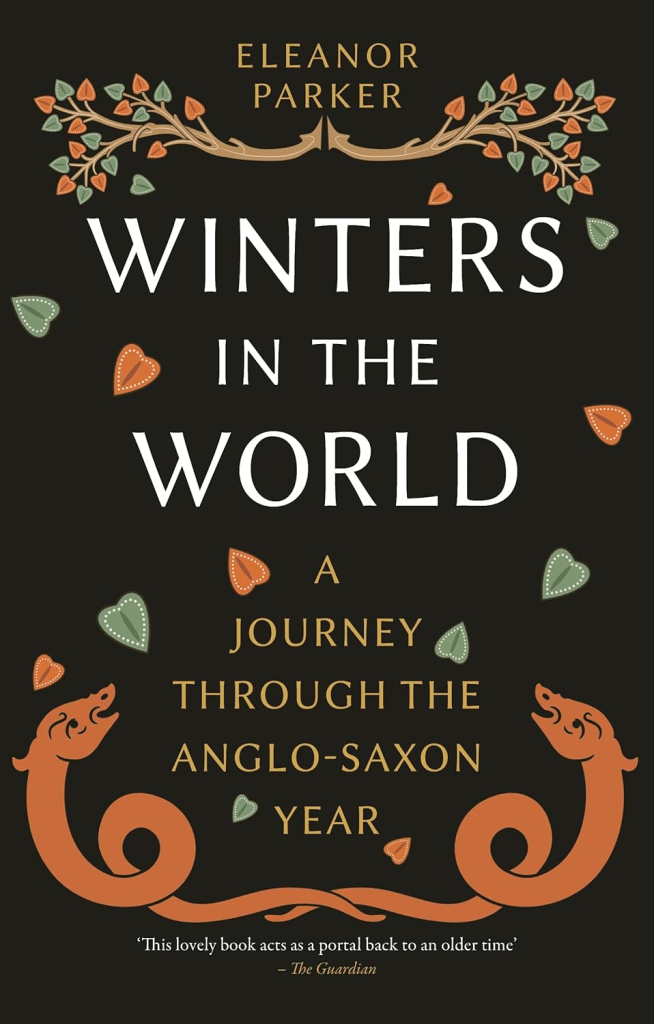
Eleanor Parker in her Winters of the World – A Journey Through the Anglo-Saxon Year mentions Rheda a couple of times. March is the month Hreðmonað, named for the goddess Hreða (or Rheda) and is a time when sacrifices were made to her. This information comes from her own reading of the Anglo-Saxon historian and monk, the Venerable Bede who in turn ignores other possible names for March, eg Hlyda. It is entirely possible that the month is more to do with the etymology of the words used and how they represent March as ‘fierce’ and ‘wild’. When I first started digging around, I actually, and still do, preferred the name Hreða (Hretha) to Rheda but thought it might cause problems with pronunciation. Do I include the ‘H’ at the start or not when I say it? I had that trouble with Hweol in The Five Turns of the Wheel and even though I know the correct pronunciation I keep forgetting. This is me making life easy for myself – and the reader.
Her book is a wonderful read by the way, blending her knowledge of the customs and ritual of the Anglo-Saxon world with the poetry of that time.
Hretha also gets a very brief mention in Ronald Hutton’s Pagan Britain. He, too, references Bede as the source for this particular goddess. This reinforces a little of what I mentioned above (his book was published before Winters of the World):
“Various scholars have cast doubt on Bede’s two goddesses, as they are mentioned nowhere else and the source of his information is unknown. He speaks of them only because of his belief that the Anglo-Saxon months equivalent to March and April, Hrethmonath and Eosturmonath, were named after them.” (p.298, Pagan Britain, Hutton).
And this from Bede’s own Reckoning of Time:
“The first month, which the Latins call January, is Giuli; February is called Solmonath; March Hrethmonath; April, Eosturmonath; May, Thrimilchi; June, Litha; July, also Litha; August, Weodmonath; September, Halegmonath; October, Winterfilleth; November, Blodmonath; December, Giuli, the same name by which January is called.”
“Hrethmonath is named for their goddess Hretha, to whom they sacrificed at this time.”
And there you have it. The one reference to Hretha in all of our early literature. When you browse online and find images, all are absolutely fictional, the artist’s own interpretation.
Go to Wikipedia and you have three seemingly informative – at first glance – paragraphs. Boil them down after you remove the etymological discussion and you have simply what has been stated above.
It does however include a reference to Jacob Grimm’s theories “that the name could be of Germanic origin ‘ proposes a connection between *Hrēþe and the Old High German female personal name Hruada. Grimm theorizes that the Old High German form of the goddess name Rheda was *Hrouda‘.”
So when you next decide to write a folk horror or folk lore fiction, use the past as your playground and make it your own. I did, as you will find in Harrowfield itself.
I blame Hellebore magazine for leading me to this author! These magazines not only provide informative and interesting articles but they also have further reading lists linked to them, hence my growing Ronald Hutton collection.
Within my upcoming novel, Harrowfield, I have been playing with the imagery and folk lore of Britain to create a belief system within the village in which the tale is set. One such aspect is a reference to the ‘path of green and gold’. It is both a physical route and a metaphorical route linking the villagers of Harrowfield to the site of their beliefs. But what is the green and gold? Nothing more than the golden bough itself: mistletoe.
Mistletoe has long been a feature of folk lore and mythology. In its most famous instance, it was the one plant which had failed to promise never to harm Odin’s son, Baldr. Not because it refused, however, simply that Frigg had thought the shoot too young to be asked such a thing. Loki discovered this and subsequently tracked the plant down and gave it to Baldr’s brother, the blind god Hod, instructing him to shoot it at Baldr, thereby causing his death. (The Prose Edda, Snorri Sturluson).
Beyond this, it is James George Frazer, with his book, The Golden Bough, who has investigated its use in folk lore and mythology. The title of his work was taken from the reference in Virgil’s Aeneid which describes how the poet needed to obtain the sacred item in order to enter the Underworld.
Perch’d on the double tree that bears the golden bough. Thro’ the green leafs the glitt’ring shadows glow; As, on the sacred oak, the wintry mistletoe,
(The Aeniad)
Fraser takes this description as being mistletoe seen through ‘the haze of poetry or of popular superstition’. That the plant is needed to journey to the realm of the dead meant that it held the power of life and death itself. Indeed, its existence on the oak tree, the King of the Wood, is used to mirror the death of Baldr. Until the mistletoe is removed, the King cannot die. He also explains the gold colour as being the ‘rich golden yellow which a bough of mistletoe cut and kept for some months’, and references the sight of bunches of the plant being hung by Breton peasants in June. Much of what Fraser says, or at least his wilder theories, have been debunked, but his work does provide a great deal of inspiration in terms of creating a lore for a fictional work.
The premise that mistletoe is closely associated with the fall of the old king and the rise of his successor is continued in Robert Graves White Goddess:
Look, the twin-temple posts of green and gold The overshadowing lintel stone of white. For here with white and green and gold I shine – Graft me upon the King when his sap rises That I may bloom with him at the year’s prime, That I may blind him in his hour of joy.
Druids were also referenced by Pliny (in his Natural History) as using the mistletoe for their rituals, describing how the priest ‘climbed the oak and cut the mistletoe with a golden sickle’ and once cut, sacrifices were made. The writings from this time should be treated with caution, being a product of hearsay or imagination rather than the reality, and Ronald Hutton reinforces this in his well-researched and informative Blood and Mistletoe: The History of the Druids in Britain. For instance he disputes that Lindow Man, the remains of a body found in Lindow Moss, definitely died as a result of a ritual killing – he could have just been executed. And yes, his stomach held traces of mistletoe pollen, but that could easily have contaminated his last meal. If you read this particular book, be warned you might be disappointed to find that so much that is taken as true when it comes to Druids is make-believe and invention.
These days mistletoe is simply regarded as the plant under which people kiss at Christmas. Yet much of its mythology actually centres on its supposed power over life and death.
In Harrowfield, the path of green and gold is followed in its own way. Whether that is to an end or a beginning, you will have to find out for yourself.
Yep, I’ve written a cosy Christmas murder mystery but not as you know it. This particular story is set in an alternative history. One where the British Isles are under Napoleonic rule because we lost at Waterloo. The Gallicization of the country has continued apace but there are pockets of resistance, led by King George V (reduced to a vassal) and Winston Churchill, purveyor of fine meats.
The book started out as the beginning of a tale written for a competition some years back and, even though it didn’t get very far, the idea remained with me.
Farnborough Hill House (in Hampshire, England) was the home of the Dowager Empress Eugénie in reality, and she has become the host of a very bizarre country party on the instructions of her son, Emperor Louis-Napoléon:
In addition to Prince Eddie, Churchill and his wife, the numbers include an ennobled Duke Ulyanov (aka Lenin), Adolf Schicklgruber (an oik), Kaiser Wilhelm, and Franz Ferdinand. To add to the entertainment, leading lights of music hall were invited too: Marie Lloyd, Monte Saldo (muscle man) and Paulette Franck. There are mistakes and misunderstandings, the bad poetry of Prince Eddie, and some political shenanigans. I don’t think I’ve ever had so much fun writing!
‘December 1913. Since Great Britain’s defeat at Waterloo, the island nation has existed as an ‘arrondissemont’ of France. Dowager Empress Eugénie the mother of Emperor Louis-Napoléon, is hosting a country party at her Hampshire home, Farnborough Hill House. Invitations to her Christmas gatherings are coveted and this particular occasion consists of a mixture of aristocracy, businessmen and music hall artistes including the infamous Paulette.
Winston Churchill, purveyor of fine meats, and part of Britain’s underground resistance is also invited. His remit is to keep the errant Prince Eddie in check and shed some light on Paulette’s involvement in the scandal swirling around the murder of his friend, singer Harry Fragson. However, when the Empress decides to stage her own ‘murder mystery’ as part of the festivities, a real body in the library appears. Immediately, Paulette is suspected.
As snow sets in and isolates the house and its inhabitants, can Winston save her bacon and escape a roasting from both the Emperor and the nominal King, George V?’
Twiggy Voo? was a music hall song performed by Marie Lloyd, it is also one which one of the unfortunate murder victims was noted for. As the story descends into farce, this phrase becomes more pertinent, if you twig my meaning. Whilst I haven’t got Marie singing, here’s the melody and lyrics if you want to sing along!
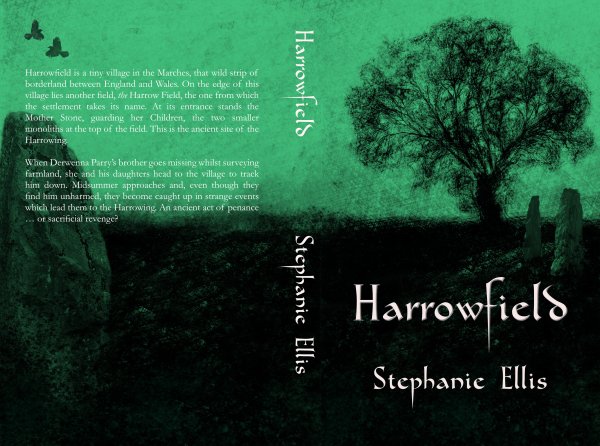
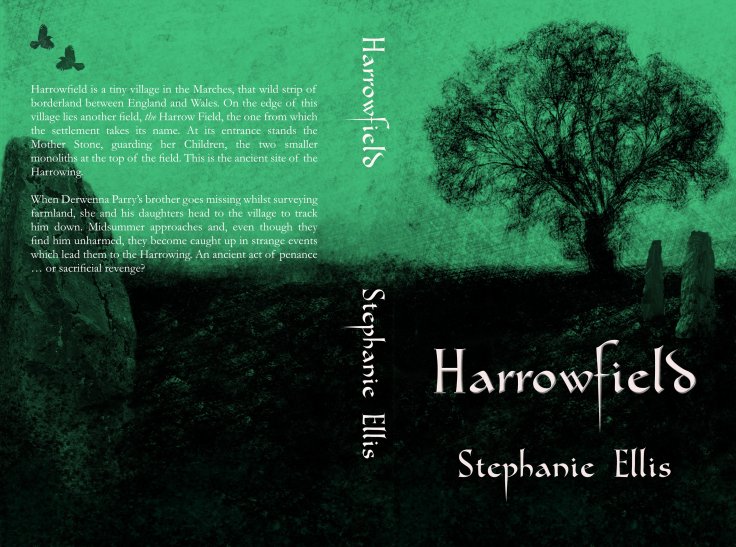
The autumn is a perfect time to release new folk horror, especially when you are wrapped up against the elements and wishing it was summer. Harrowfield takes you back to that time of year, to Midsummer when old traditions are re-enacted as they are across the land. There is dance and music, old songs and old stories, just like in any village, entertainments to celebrate the season and to ensure good harvest and prosperity. And the village of Harrowfield is in need of change.
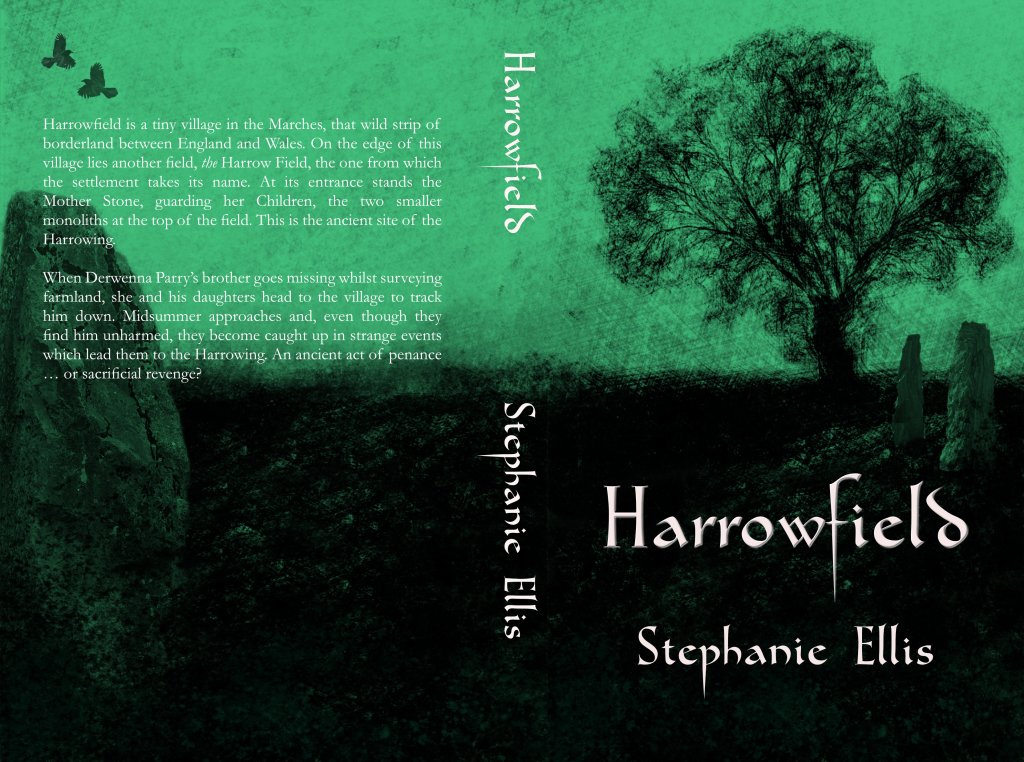
‘Harrowfield is a tiny village in the Marches, that wild strip of borderland between England and Wales. On the edge of this village lies another field, the Harrow Field, the one from which the settlement takes its name. At its entrance stands the Mother Stone, guarding her Children, the two smaller monoliths at the top of the field. This is the ancient site of the Harrowing.
When Derwenna Parry’s brother goes missing whilst surveying farmland, she and his daughters head to the village to track him down. Midsummer approaches and, even though they find him unharmed, they become caught up in strange events which lead them to the Harrowing. An ancient act of penance … or sacrificial revenge?’
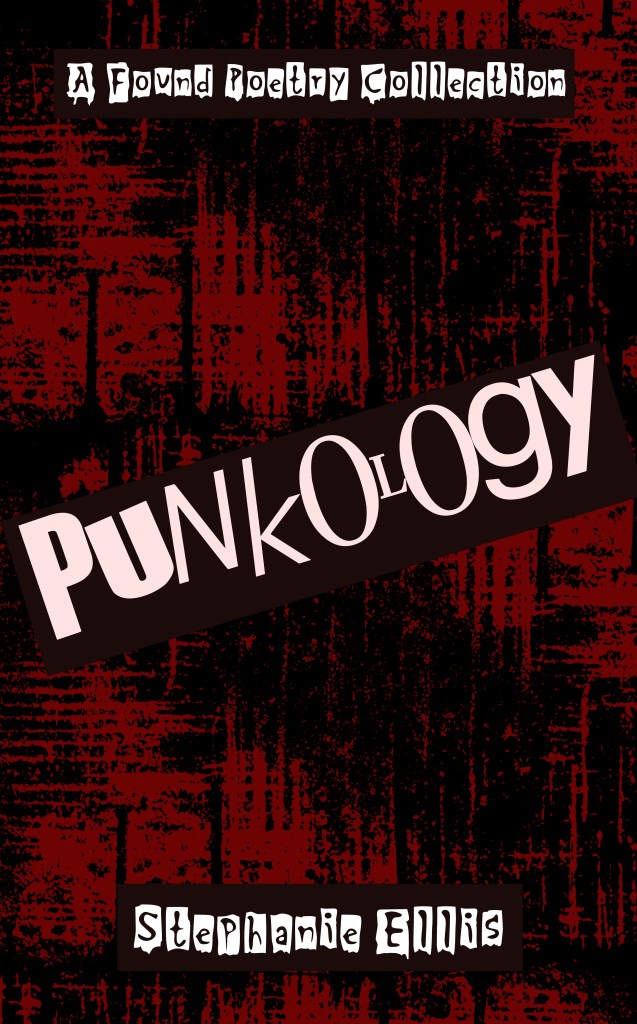
I did it! I wrote 30 original found poems from punk song lyrics of the mid-70s to 1980(ish). And I continued during that month to craft extra so that by the end I had enough for a small book. Punkology contains 50 poems sourced from bands such as Siouxsie and the Banshees, Wire, Undertones, Boomtown Rats, Sham 69, Hazel O’Connor and more.
Whilst the paperback is only available on amazon. The ebook can be found both there or directly from my own store here (you will be sent a link to download via Bookfunnel).
This is a self-published effort so if anyone’s curious about what I used – I know people often worry about cost of this sort of thing – here you are:
I used Word to create the mss for both ebook and print pdf.
Print: unlike other books, this did not have any typesetting requirements so it made sense to simply make sure styles were applied to the text and then the book was saved as a 5×8 pdf for print.
Affinity Photo was used for the cover design. I kept it simple by using a black layer and applying a ‘grunge-textured’ paint brush across it in red. The two fonts were free use from DaFont (Sex Pistols for the title and Beat My Guest for the rest on the front).
I converted the docx file to epub in Calibre (free ebook management conversion software). The epub was uploaded to Bookfunnel along with the pdf so purchasers can choose how they want it.
The docx and pdf files were also uploaded to amazon for kindle and print respectively.
Yes, I pay a subscription for Bookfunnel, but the payhip site which hosts my store is free to setup and only takes a small percentage. I worked out that the percentage taken by paypal and payhip combined still gives more return than amazon.
I’ll probably work out easier/more efficient ways to do things on the sales side but I’m working at creating a space that is mine and not subject to the whims of other platforms (whether it be amazon, apple or whoever, who suddenly decide to delist your work, apple did that briefly to me and then the books suddenly reappeared again). I’ve not uploaded to B&N or Kobo as with some books as I now have payhip. Nor am I going Draft2Digital as that’s another expense.
Yes, there’s the whole marketing issue but that’s something else – as are paperbacks. This is all about my control of my own work should other platforms prove a pain. An ongoing process but I think a backup plan is necessary in these current climes. Note: this applies only to my self-published work and not that which is homed with traditional publishers/presses.
A couple of years back, I created a collection, Metallurgy, which consisted of 100 found poems sourced from 200 metal lyrics. All poems were original but sources were named. This year, I was trying to decide what to do for National Poetry Month as I hadn’t written too much recently – apart from as a longer work (Mason Gorey).
As a spur to writing, I decided to go back to found poetry but this time mine the songs of my teen years. Punk appeared in the UK in the mid-70s. Songs started to filter through on the radio and I also discovered John Peel’s radio show at 10pm each week night on Radio 1 (which took my listening away from the very crackly Radio Luxembourg I tried to tune into back then!). Peel was a great advocate for indie bands and new music and enthusiastically shared his finds with his audience. Siouxsie and the Banshees, The Stranglers, The Clash, Joy Division, The Undertones, amongst many others, became firm favourites, and I still listen to them today. The music was very much rooted in anger and a feeling of hopelessness against the situation at the time – years of government messes, union strikes (rubbish not collected, bodies not buried, power cuts), unemployment – and people wanted to find their own way through. Today, sadly, with the turmoil in the UK and around the world, I am feeling that time coming back. But punk was more than anger, it was energy and exuberance, of getting up on stage even if you’d never sung or played an instrument before and having a go. Anyone could do it. It was also showed you did not necessarily need the big record labels to advance and small indie labels would dominate Peel’s playlist.
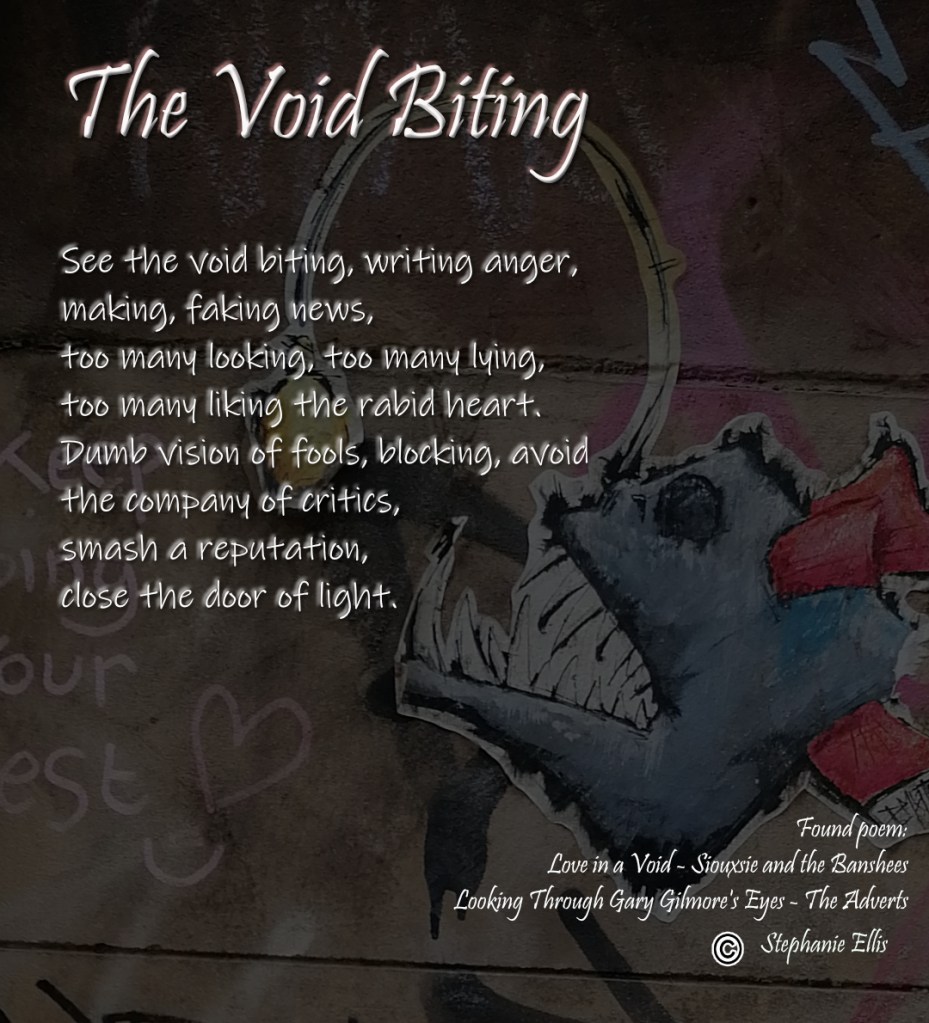
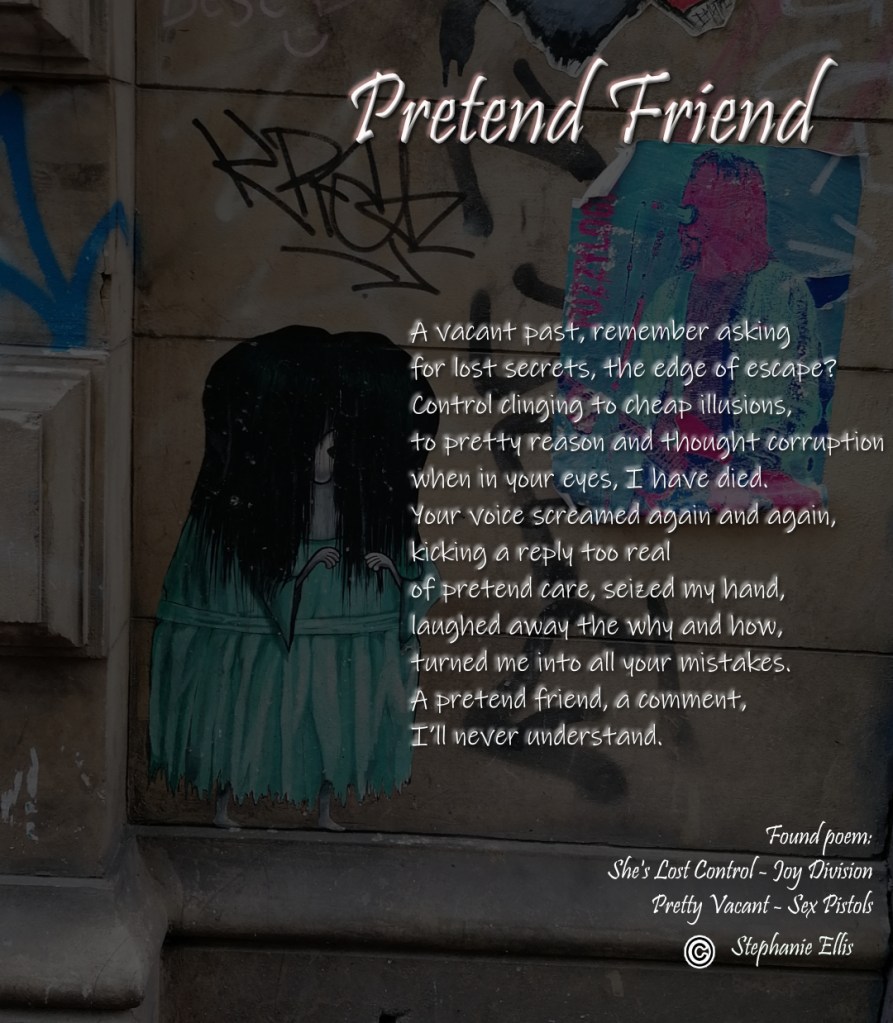
Punkology is my nostalgia trip, found poems from my favourite songs and which I have been sharing on bsky rather than Meta because of the whole scraping issue. It’s probably a futile gesture, but it’s still one I can make. I have created a poem for every day in April and hopefully will be able to create a collection of a similar size to Metallurgy. Even if I can’t get to 100, I will aim for 50! Punk songs were short in comparison to songs you usually hear, the lines simple and repetitive, so it was even harder to come up with something original. But I think I’ve managed.
Here are the first 10 which have been shared on bsky.
If you want to hear the songs of my youth, the Punkology playlist can be found here:
A while ago, I wrote a blog post for the British Fantasy Society ‘A Woman’s World (Not)’ because as a woman who came late to writing – and writing horror at that – I was struggling to see myself in the community. Where were others like me? Where were the opportunities? And it’s something I still ponder although with a few improvements.
I have found some of those older women, usually via zoom meetups or readings, women who don’t have profile pics or the images I had seen did not equate to the reality. Why are we so frightened of showing ourselves as we are? I have also seen more women in conventions and some improved networking aspects but I still have a struggle with the issue of age and the female writer. I am now 60 and have been writing for just over a decade, starting like most with short stories and my first novella in 2020, with novels following. And whilst I saw possibilities still at 50, I am now wondering if those are vanishing.
Rejections are often worded that they ‘can only take on a small number of new authors’ to develop their careers. These wordings have had me thinking that they do not perceive an older female writer as ‘value for money’, even if we can give twenty plus years more of our writing. Calls which say no simultaneous submissions with long turn round times suddenly seem not worth doing. As an older writer, thoughts of mortality make you realise you don’t have the time to wait around for some decisions. Nine months plus for a book? I don’t have that time to waste any more. I don’t mind that a book will be accepted but not published for a year or two. That’s fine. It’s the idea of wasted time that I have a problem with.
I have my own experiences, my own perceptions and I would love to know what others have found. I recently responded to Gwendolyn Kiste’s call out for women who’d like to be involved in raising issues concerned with women in horror, taking part in discussions, promoting each other – all sorts of things and I stuck my hand up, referencing in particular my interest in older women writers in our genre. We’re hopefully going to get a panel together and do something online related to this topic. With this in view, I’d like to find other women who fall into the category of the 50+ writer. Yes, to take part in the panel, but also to provide me with information I can use to compile an article giving a snapshot of what it’s like to be us. If you would just like to offer up responses to the questions I pose below and are happy for me to use your comments in my article, please respond in the comments or use the contact form (I can withhold names if wished).
I think there are two aspects to consider before you look at the questions:
Are you a woman who has been writing for some time but now hitting 50+ or are you a new writer just starting out at 50+?
For the established writer, are you seeing few opportunities, do you feel you are becoming invisible?
For the new writer, as above but do you feel invisible already?
Do you think women are invisible as older writers because they are also invisible within the pages? (We see few older female protagonists, including those showing menopausal/post-menopausal symptoms. Our biology impacts our lives in all sorts of messy ways but it’s never shown on page or screen, barring the occasional exception.)
Do you think that male editors don’t necessarily ‘get’ female horror, ie we don’t write the kind of horror they think people want to read? And life experience can deliver up some pretty grim source material.
Are you restricted in your writing by your circumstances, especially those working full-time but with carer roles (whether children/elderly parents)?
Social media is a horrible necessity but it is draining. Does the whole thing exhaust you? Do you have time for it?
Do you think social media is skewed against older women because the cult of youth or youthful appearance dominates?
Do you feel isolated, are you looking for a support network? (Or where have you found your tribe?)
Have you experienced ageism (and/or sexism)?
Do you think ageism exists or do you think this is perception when the reality is different?
What could be done within the indie horror industry to help older women?
When submission calls asks for underrepresented groups, do you think older women fit this category?
Many of the above questions could apply to female writers of other genres but I think a proper look into our own industry is worthwhile. If there is an issue, it needs to be dealt with, if it’s misconceived perceptions, then it would be nice to put those to rest.
Time to dust off my old favourite and let this little story have its yearly outing.
The Christmas Tree
The Christmas tree waited patiently at the bottom of the garden. It was nearly time. From behind, the others rustled their bare branches in expectation. They were old and nobody came for them anymore. It did not matter, Christmas was a time for sharing and they would still enjoy the festivities.
A new family had moved into the house in the summer and three young children had spent those distant hazy days running in and out of the trees, hiding from grown-ups and tormenting the ageing dog that had come with them. The mother had spotted the tree during one of their games and made a mental note that it would be the perfect tree for Christmas. The high-ceilinged rooms of their house demanded the presence of such a majestic specimen.
***
The first day of the holidays had been spent putting the finishing touches to the decorations that now hung around the house until all that was needed was the tree. She had sent the children on ahead of her whilst she gathered together the angel and the little wooden soldiers that were to adorn its branches, listening with half an ear to the sound of their youthful laughter echoing through the cold night air.
Her sons ran wildly in the happy beam of the moon, darting between frost-trimmed branches that glittered as brightly as any tinsel, releasing their pent-up energy into the darkness. The moon loved this time of year, when the children would come to decorate the tree.
As their mother called to them from the house, the boys dived beneath the tree’s branches, stifling their giggles, trying to ignore the scratch of needles. They loved to hide from her and the tree helped them. It curled its limbs around their waists, gripping them tightly, lifting them up, silencing them before they realised what was happening. Then the tree stilled itself, waiting as the mother approached her children’s hiding place and started to creep quietly into the darkness, ready to make them jump, not expecting the surprise in store for her as a branch dug its needles into clothes and flesh so that she too was held prisoner. She struggled fiercely but the tree was obstinate and refused to give her up, piercing her body with its knife-edge leaves so that she too had no choice but to stay.
The mother’s protests, sung as loudly as any carol, were ignored as she was lifted higher and higher, past the bodies of her children that now dangled like little wooden soldiers in their crimson coats, up and up until she cleared the topmost boughs to be placed almost reverently at its peak. The finishing touch, a dusting of frost, made her shimmer as brightly as any angel.
The others let out a gentle sigh of approval, a shared delight in the decorations that now adorned the tree. Christmas had finally come.